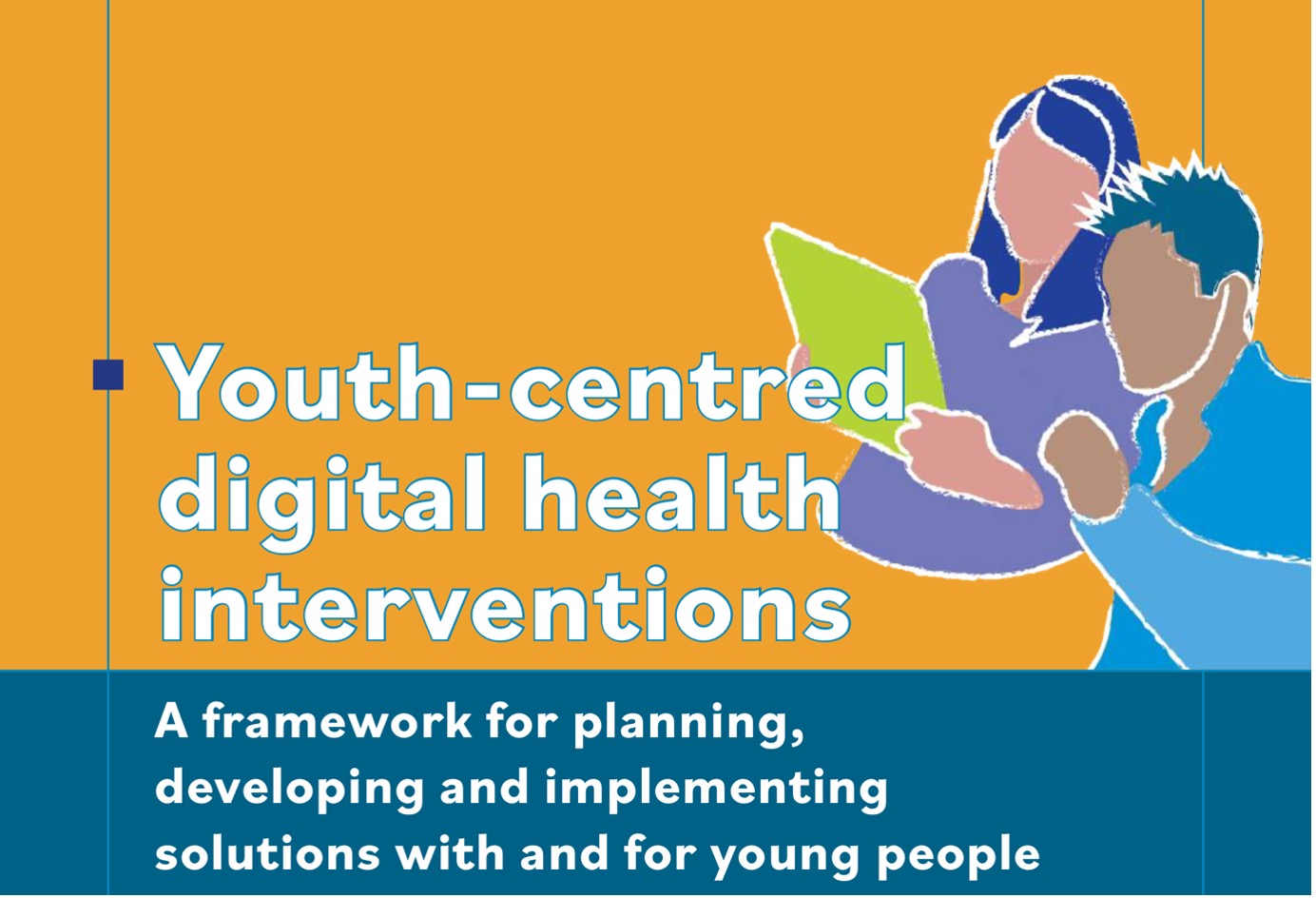
Illustration of young people reading with orange background

UN guidance on Digital Health, Gender Equality and Human Rights: An annotated list

How to address gender, equity and rights in digital health policies and strategies? All the UN guidance shared here.

The World Health Organization (WHO)’s Global Health Strategy on Digital Health 2020-2025 (recently extended to 2027 by the World Health Assembly) seeks to improve health for everyone, by accelerating the development and adoption of digital health globally. Strategic objective 4 of the Strategy advocates for more people-centred health systems through advancements in digital health literacy, gender equality and inclusive participatory approaches to promote health equity and ensure digital health interventions are accessible and responsive to the needs of diverse populations. Unfortunately, these critical areas are still largely overlooked, particularly in national digital health strategy design and implementation; as evidenced in this report from the University of Warwick and DHRP.

The United Nations (UN) system, including agencies the WHO, the United Nations Development Programme (UNDP) and United Nations Women (UN Women) have developed valuable guidance on digital health, artificial intelligence, gender equality and human rights. Yet references to this guidance remains notably missing from digital health strategies and planning processes.

As part of our work to support national governments, advocates and others to create stronger digital health strategies, Javier Garcia Martinez and I at the University of Warwick team in the Digital Health and Rights Project have compiled technical guidance documents from across the UN system. We aim to make these existing resources more accessible and widely used by a range of stakeholders desirous of ensuring countries design inclusive, effective and people-centred digital health systems grounded in rights-based principles.

Below is our list of UN guidance, with short summaries and links:

  1. WHO (2021) Ethics and Governance of Artificial Intelligence for Health: To ensure AI serves all populations equitably, this guidance recommends more inclusive stakeholder engagement in AI development for health, the adoption of measures to overcome biases related to race, ethnicity and gender, robust data protection laws and the regulation of online health services to promote safety, accountability and respect for individual rights.
  2. WHO (2021) Youth-centred digital health interventions: a framework for planning, developing and implementing solutions with and for young people: Tailored to support digital health intervention designers, developers, implementers, researchers and funders, this document stresses the critical need to engage young people as equal partners throughout these processes, leveraging human-centred design to understand their experiences and empower them to shape solutions that address their unique health needs.
  3. WHO (2024) Ethics and governance of Artificial Intelligence for Health: Guidance on large multi-modal models: This guidance document focuses on large multi-modal models (LMMs), a type of generative AI capable of processing and generating various types of data and content. It aims to assist Member States in mapping the benefits and challenges associated with the use of LMMs for health and provides recommendations for responsible development, governance and use—by companies, governments and through international collaboration.
  4. WHO (2024) Unpacking artificial intelligence in sexual and reproductive health and rights: This technical brief explores the application of artificial intelligence (AI) in sexual and reproductive health and rights (SRHR). It outlines priority actions and considerations to mitigate the specific risks of AI in SRHR.
  5. UNDP (2021) Guidance on the Rights-Based and Ethical Use of Digital Technologies in HIV and Health Programmes: This UNDP guidance provides essential recommendations for countries adopting digital technologies in HIV and health programmes, emphasizing the importance of balancing technological benefits with ethical, technical and human rights considerations. In line with commitments made in the Political Declaration on HIV and AIDS, this document offers practical checklists for governments, private sector actors, and donor agencies.
  6. UNDP (2025) Toolkit for Ensuring Rights-Based and Ethical Use of Digital Technologies in HIV and Health Programmes: This Guidance document outlines key ethical, human rights and technical considerations for countries adopting digital technologies for health, detailing human rights risks, norms and standards, and provides a practical checklist for assessment. The Toolkit is practical guidance for UN staff, governments, partners, technology developers, and civil society organizations for implementing ethical and rights-based digital health solutions.
  7. UN Women (2023) Gender Analysis in Technical Areas: Digital Inclusion: This guidance, developed in consultation with the UN Inter-Agency Network on Women and Gender Equality, was designed to build the capacities of sector specialists and gender focal points in conducting gender analysis within digital inclusion efforts
  8. UN Women (2023) Technology-facilitated violence against women: Taking stock of evidence and data collection: Drawing on a phased scoping review of academic and grey literature, this paper presents a landscape review highlighting what is known about technology facilitated violence against women (TF VAW), who is generating this research, and how the evidence is generated.
  9. UN Women (2024) Placing gender-equality at the heart of the global digital compact: Taking forward recommendations of the sixty seventh session of the Commission on the Status of Women: This paper, prepared by UN Women and the Action Coalition on Innovation and Technology for Gender Equality, aims to help governments, policymakers, multilateral organizations, the private sector, and civil society build consensus around a gender-transformative framework to advance women’s and girls’ rights in the digital age.

If you find other guidance that we missed, please contact us – and if you want to join the conversation, join our mailing list for exciting upcoming events that will explore these issues in more depth!

  • Tara Imalingat, Advocacy and Impact Coordinator, University of Warwick